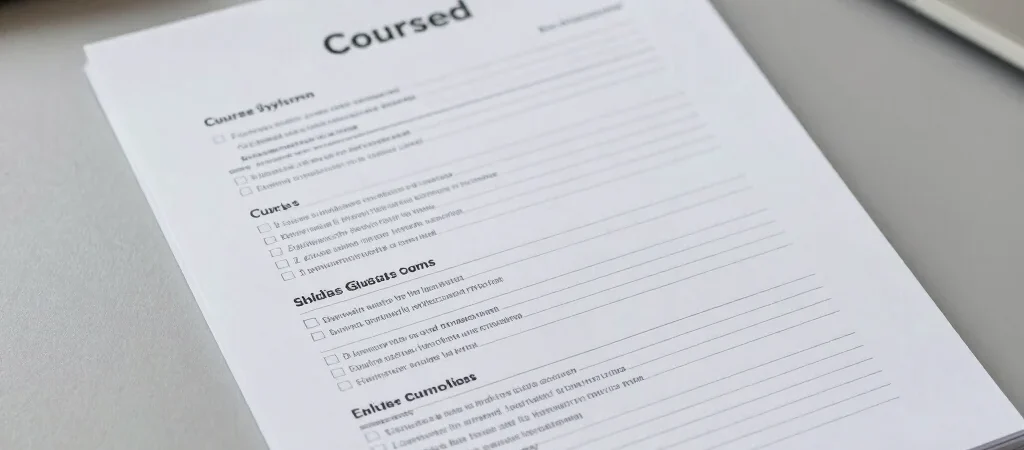
A course promises to teach a skill, but the sales page only shows a few broad module names. Before enrolling, look for the syllabus details that reveal what you will actually do: watch lectures, complete exercises, submit work for feedback, or follow along with downloadable files. The format matters as much as the topic when you’re deciding whether the course fits your schedule and learning style.
Look past module names
A heading like “Advanced Editing” tells you little by itself. More useful descriptions name a technique, a project, or a decision you will learn to make. Check whether the lessons build toward a finished outcome, and whether the course assumes experience you do not yet have.
Then inspect the teaching format. Self-paced video may suit someone learning between work commitments, while scheduled sessions or instructor feedback require more coordination but may provide a way to ask questions. Don’t infer access to coaching, a community, or graded assignments from promotional language; verify that each is explicitly included.
Check the terms and extras
Find out how long you can access the lessons, whether materials can be downloaded, and whether a certificate is included or costs extra. If the course requires software, equipment, or a paid membership, add those expenses to the course fee when judging affordability. These details can change the practical value of a course even when the lesson content looks relevant.
A useful syllabus lets you picture the work ahead and compare it with what you want to learn—not just with another course’s headline. If key details are missing, treat that as uncertainty, not as proof that the course includes more than it says. Some course links on Skill Reviewer may be affiliate links that earn us a commission; we aim to make the format, inclusions, limitations, and relevant costs clear so readers can decide for themselves.